




Cunningham Chrysler of Edinboro

Blog / Service Center

Blog

All Service Center Edinboro, PA Cunningham Chrysler of Edinboro 2024 Jeep Models CDJR Dealership Edinboro Jeep Dealer Cunningham Chrysler of Edinboro Service Edinboro Restaurants 2022 Jeep Models 2024 Ram Models Local Area RAM 1500 2023 Jeep models 2025 Models Dodge Vehicles Pennsylvania State Parks Jeep Tourism 202 Dodge Models 2024 Chrysler Models Dessert near me Electric Cars Grand Cherokee RAM Trucks Wagoneer
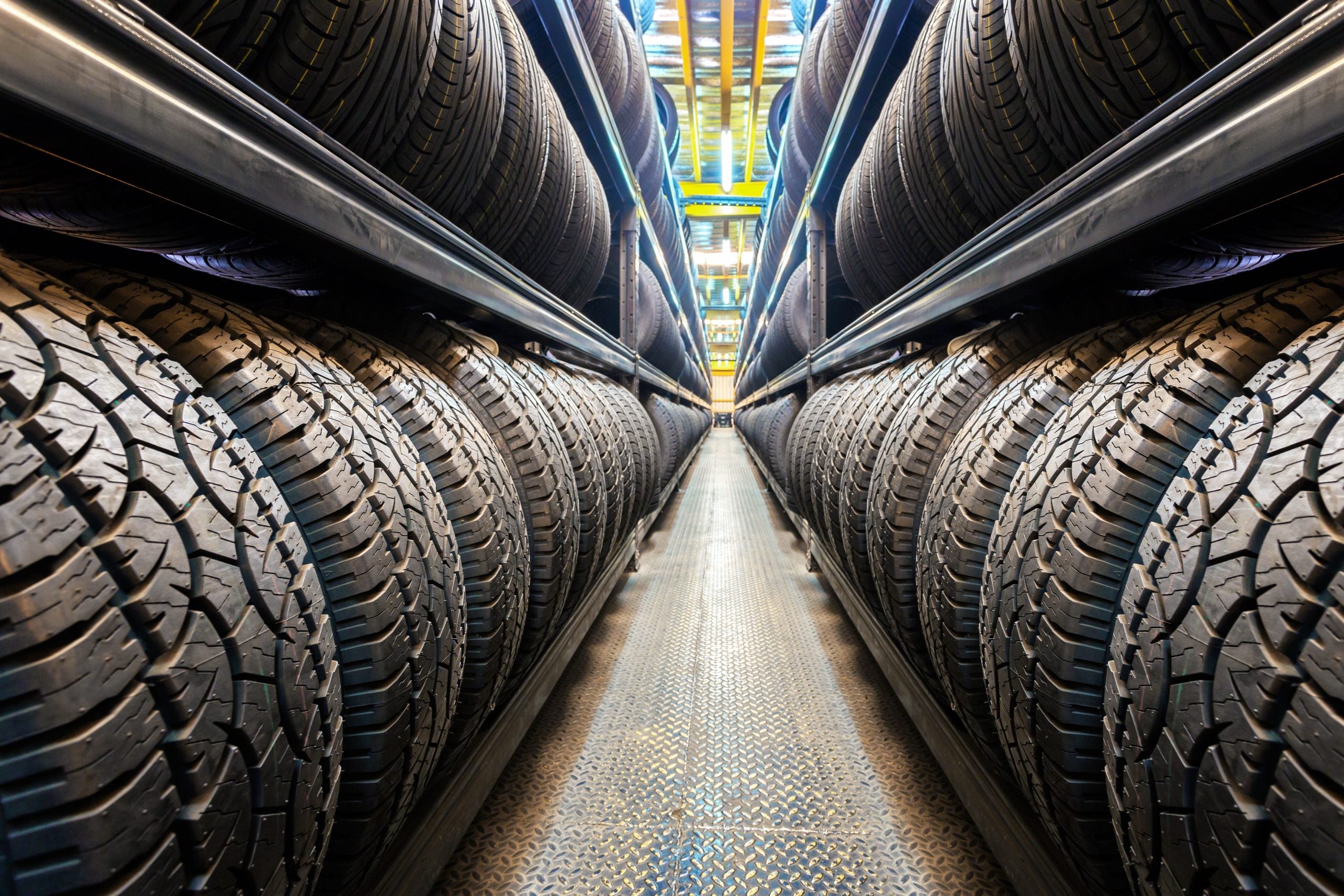
Rows of tires in a warehouse

Ram Truck Tire Care: Ensuring Safety and Performance

Your three or four-ton pickup is held to the road by its tires. As such, the condition of your tires directly impacts your safety and many other aspects of vehicle performance. Following good RAM tire maintenance, as outlined below, will keep your truck running smoothly and securely for its longest possible lifespan, no matter how hard it has to work. more Check Tire Pressure Every Month Air pressure inside tires must be kept at the precise PSI recommended in your owner's manual. As tire pressure tends to gradually decrease, it's important to check the PSI of each tire once a month and add air as required. You might also find the PSI a little high one day, in which case some air needs to be released. Have Your Tires Rotated Frequently As the weight varies in different parts of your truck, your tires may wear down unevenly over time. If tires become too uneven, they pose a safety hazard and also wear out faster. You can combat uneven tire wear with regular rotations; twice a year is usually a good interval. Measure and Correct Tire Alignment Your daily driving may sometimes require taking your RAM over rough tracks or off-road terrain. These uneven road surfaces like slowly push tires out of their original alignment. Even very slightly misaligned tires could hinder your handling and traction, so it's advisable to have your tire alignment measured twice a year and realigned when needed. Replace Tires Promptly When the Time Comes The lifespan of truck tires varies considerably depending on the type of tire, how much pressure you put your tires under, and the quality of your maintenance. The key is to keep a close eye on your tires with regular inspections. That way, you'll always know when it's time for replacements and reduce the risk of a skid or blowout.   Keep a close eye on the tread depths, which wear down steadily through use. When it comes to trucks, the minimum legal tread depth for tires on steering wheels or any front tires in the US is 4/32 of an inch, and 2/32 of an inch for the other tires. When your tires near this level of shallowness, have them replaced. Also, watch out for signs of damage which might mean a tire is no longer safe to use. Book Routine RAM Tire Maintenance When you schedule regular tire maintenance with us, you lessen the risk of accidentally neglecting your tires. During routine rotations and tire alignments, we can also inspect each tire for signs of trouble and let you know how much longer they're likely to last. Book your next tire rotation today at Cunningham Chrysler of Edinboro in Edinboro, PA. For over 40 years, we've been dedicated to supporting the area's drivers, providing top-notch trucks, cars, maintenance services, and customer care. Image via
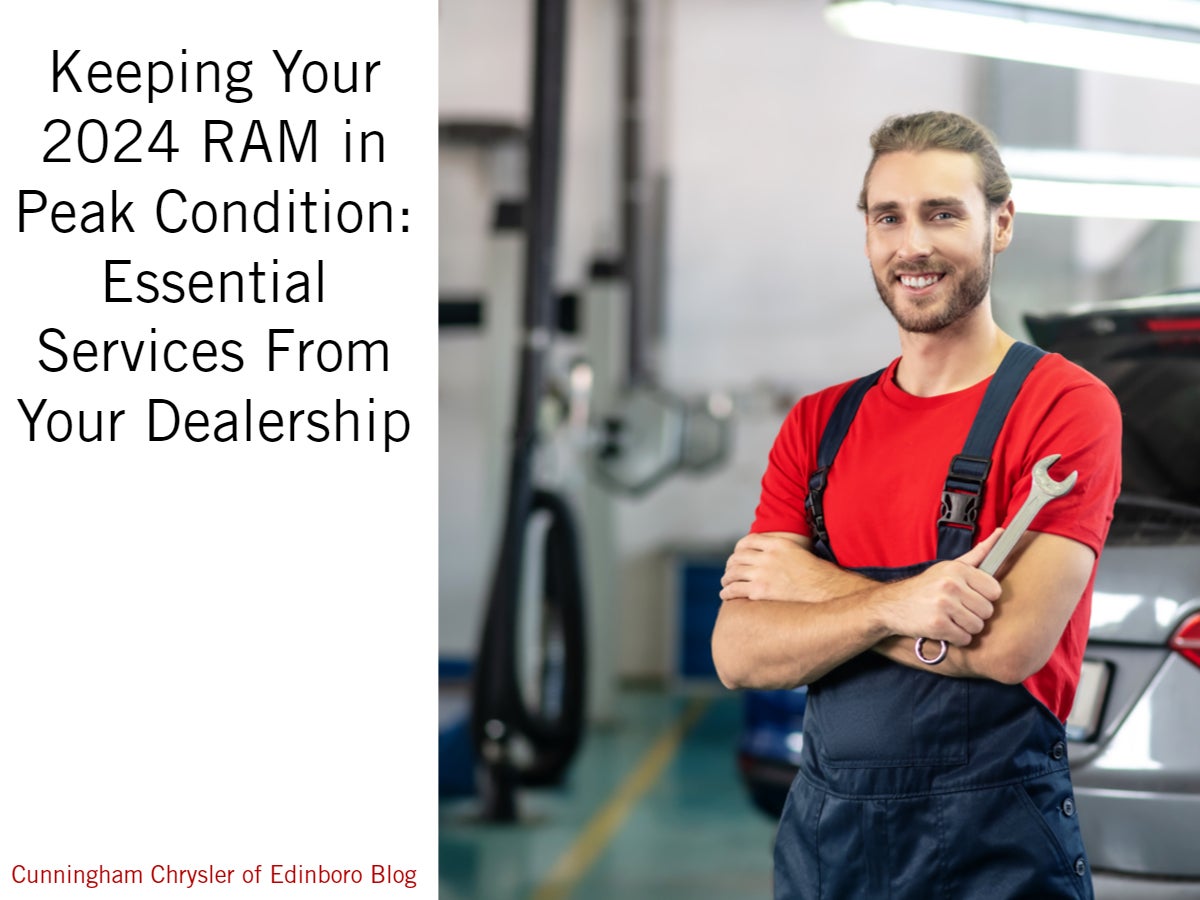
A graphic containing a photo of a mechanic holding a wrench and the text: Keeping Your 2024 RAM in Peak Condition Essential Services From Your Dealership - Cunningham Chrysler of Edinboro Blog

Keeping Your 2024 RAM in Peak Condition: Essential Services From Your Dealership

To keep your 2024 RAM in top-notch condition, you have to do more than just wash it and fill up the tank. To ensure that your vehicle performs at its best for years to come, you need to head to the RAM dealership for regular maintenance services. more Regular Oil Changes Your RAM's engine depends on oil. Regular oil changes prevent engine wear and tear by ensuring proper lubrication, reducing friction, and helping to keep the engine components cool during operation. Not sure how often to change your oil? Follow the manufacturer's recommendations. Depending on your driving habits, this could be every 5,000 to 7,500 miles. Tire Maintenance Tires play a big part in your safety, comfort, and keeping that fuel efficiency up. Poorly maintained tires can lead to reduced traction, longer stopping distances, and even blowouts. Regularly inspect your tires for signs of wear and tear. Check the pressure at least once a month to ensure they are inflated to the correct pressure, and have them rotated on schedule. Tire rotations usually line up with oil changes, which makes it easier to remember. Brake Inspections You can't drive safely without working brakes, but over time they become less effective. Have your brakes inspected regularly to catch issues with them before they become serious. Our technicians will look for wear on your pads, check for fluid leaks, and examine the rotors. We'll replace any worn components with OEM parts that are made specifically for your car. Fluid Checks and Replacements Besides engine oil, your RAM relies on a few other vital fluids. These fluids, including coolant, brake fluid, and transmission fluid, need to be kept clean and at the correct levels. Fluids should be topped off and replaced as needed, and regular checks at your dealership can prevent them from getting dangerously low. Engine and Cabin Air Filter Replacement Air filters prevent dirt and other pollutants from entering your vehicle's engine and cabin, keeping the air inside your truck clean and protecting the engine from harmful debris. Replace your engine air filter and cabin air filter according to RAM's schedule. This usually means 15,000 to 30,000 miles for engine air filters and possibly more often for cabin air filters. Battery Care A failing battery can impact your electrical system's performance, or worse, leave you stranded. Have your battery terminals cleaned and the battery tested during regular service visits to check its charge and overall health. Most batteries need to be replaced every three to five years. Scheduling regular visits to the dealership is the best way to keep your RAM in the best possible condition. Call Cunningham Chrysler of Edinboro in Edinboro, PA, to schedule your next service today. Image via

A photo of a cars headlights and the text: 4 Signs Your CDJR Vehicle Needs New Headlights

4 Signs Your CDJR Vehicle Needs New Headlights

Numerous parts of your vehicle need to be replaced every few years. The lights on your vehicle are among those components that need to be replaced every so often. Your local Chrysler dealer is the best place to get new headlights, so stop by when you notice any of the signs below that indicate your headlights are getting ready to burn out. more 1. The Headlights Aren't Working One or both headlights no longer working is the most obvious sign that you need to get those headlights replaced. When one of the headlights burns out, it may seem like you can just replace that bulb. However, you should always have both headlights replaced at the same time. Even if one of your bulbs is still working, it's probably not going to work for much longer after the other has died. It's more convenient to get both replaced at the same time instead of taking another trip to get your other headlight replaced in the near future. 2. The Headlights Are Hazy or Discolored If the light coming from your headlights seems hazy or has a yellow tint, then you may not need to have the bulbs replaced. However, you may need new headlight covers. UV light, dirt, and salt stain the headlight covers over time and commonly cause haziness or yellowing that impacts how effective your headlights are. The headlight covers may need to be replaced or cleaned using a special solution at the dealer. 3. The Headlights Are Flickering Your headlights flickering is never normal, even if they just flicker once or twice right after you switch them on. Any form of flickering is a sign that your headlights may burn out soon. Flickering can also indicate problems with your electrical system, so make sure you look out for other electrical issues in the vehicle. Regardless of what the problem is, flickering headlights warrant a trip to the dealer so you can have the problem fixed ASAP. 4. The Headlights Have Gotten Dimmer It's natural for your headlights to get dimmer over time, but eventually, they'll become so dim that you can't see the road as well as you used to at night. If your headlights are noticeably dimmer than they used to be, visit the dealer as soon as possible. The headlights may burn out very soon. Dimming headlights can also indicate an electrical issue, so be aware and keep an eye out for other signs of electrical problems.   If your headlights have burned out, or you think they will soon, visit Cunningham Chrysler of Edinboro in Edinboro, PA. We'll make sure we check on their function when you stop by for your regular service, too. Image via

A photo of an SUV tire driving in the snow and the text: 4 Car Maintenance Tips to Get Your Jeep Ready for Winter

4 Car Maintenance Tips to Get Your Jeep Ready for Winter

The winter season is both beautiful and harsh. During the cold months, snow and cold temperatures put extra stress on your vehicle and make your car systems work harder. That's why it's important to ensure you do your winter maintenance so your Jeep is ready to go. Read on to learn more about the Jeep maintenance you can complete to help your vehicle power through the winter. more 4 Jeep Maintenance Tips to Prep Your Jeep for Winter 1. Cooling System Winter Maintenance Extreme weather means that your cooling system has to work harder to keep your Jeep running. Coolant keeps your engine from overheating and keeps the engine and other components from seizing when temperatures dip. The first thing you need to do for winter is check underneath your Jeep for coolant leaks. If you notice a bright yellow or green fluid, it's possibly antifreeze and needs to be checked out by a professional. 2. Radiator Coolant Levels The next thing you need to check is your radiator coolant level. The fluid should be maintained at the proper fuel level. Wait until the Jeep is cooled down, or check it before you start the vehicle. If the fluid is low, corroded, or dark, have the levels topped off or changed at your dealership. You also want to make sure you are using the correct antifreeze/water mixture in your vehicle. The antifreeze will keep the water from freezing inside the lines in your car. The certified technicians at your dealership will be able to recommend the ratio you need for your area. You should also consider having your coolant flushed every few years. 3. Belts, Seals, and Hoses Rubber shrinks and hardens as the weather gets cold. If you had leaks when the weather was warm, they are almost guaranteed to be much worse as temperatures drop. Have your vehicle's belts, seals, and hoses visually inspected and replaced if needed. 4. Oil Change You should be getting regular oil changes for your Jeep. However, it's also very important to get your oil changed as winter hits. Cold weather can cause the oil in your Jeep to move too slowly, causing excessive wear on your engine. This is why having the correct motor oil in your Jeep is so important. The professionals at your dealership can change your oil and get you back on the road in no time. As winter hits hard, you should also consider changing your windshield wiper blades to ensure that you can see through the harsh conditions the cold weather provides. Give us a call at Cunningham Chrysler of Edinboro to schedule an appointment with the professionals in our service department to get your Jeep ready for winter today. Image via

A photo of a cars oil being changed and the text: Getting an Oil Change for Your Chrysler, Dodge, Jeep, or RAM - Cunningham Chrysler of Edinboro Blog

Getting an Oil Change for Your Chrysler, Dodge, Jeep, or RAM

You should get a regular oil change for your Chrysler, Dodge, Jeep, or RAM to keep the engine running smoothly. Clean, fresh oil cools and lubricates the moving parts, allowing the engine to operate at peak performance. Let's look at how often you should visit your Chrysler dealer to change your motor oil. more How Often Should You Get an Oil Change From Your Chrysler Dealer? The old rule of changing your oil every 3,000 miles comes from days when motor oil technology was far behind where it is today. Modern synthetic blend motor oils are formulated to remain stable and effective for up to 7,500 miles. Fully synthetic oils can last over 10,000 miles before degrading. Check your owner's manual for the prescribed interval based on your engine type and recommended motor oil. Modern CDJR vehicles come with an oil life monitoring system that monitors driving habits and engine conditions and recommends the best oil service interval. Once the oil life monitor light comes on, you should visit the dealer to get fresh oil. Factors That Cause Engine Oil to Degrade Fast Driving habits like taking short trips, frequent idling, and stop-and-go driving can cause your motor oil to degrade quickly. This is because they prevent the oil from getting hot enough to burn off moisture and acidic contaminants. Longer trips are ideal as the engine reaches full operating temperature, allowing moisture and acids to evaporate. Frequently towing or hauling heavy loads can also stress the engine and cause the oil to contaminate faster. If your vehicle has an oil life monitor, you will get a warning light once the oil is due for a change. On the other hand, if you have an older car with no oil life monitor, look out for signs of oil degradation. Signs You Need Fresh Motor Oil For Your Chrysler, Dodge, Jeep, or RAM Burning Smell in the Cabin Have you noticed a burning smell coming through the vents in your cabin? This shows your oil is old and should be changed. As oil oxidizes and breaks down due to heat, it can take on a burned smell. Change the oil immediately to optimize engine lubrication. Dark or Sludgy Oil Check your oil's dipstick and see if the oil is dark black or thick and sludgy. Once oil is contaminated with moisture, blow-by gases, and combustion particles, it turns sludgy and dark. This is a sign that it can no longer cool down or lubricate the engine and should be changed. Engine Noises Listen for unusual grinding or clattering noises from under the hood. These may indicate that the oil has lost its lubricating properties. This allows the metal components to grind against each other and produce unusual sounds. Inadequate lubrication can also cause the engine to overheat and trigger the check engine or oil light.   You don't have to wait for your service interval to elapse to get fresh oil. If your oil is degraded, contact Cunningham Chrysler of Edinboro to schedule a comprehensive oil service. Image via

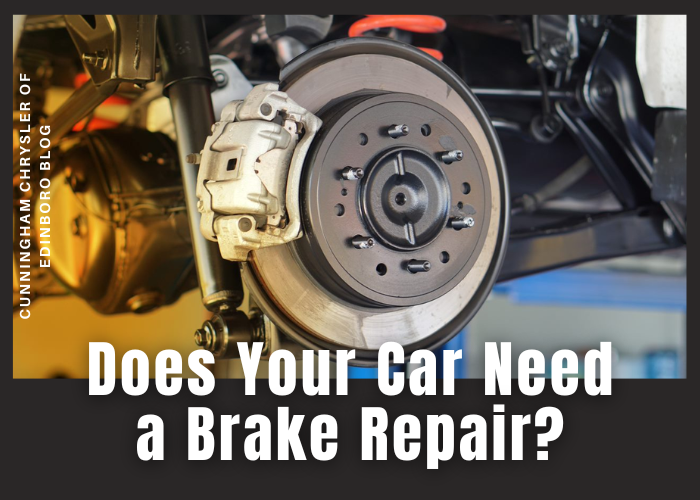
brake repair near Edinboro, PA

Does Your Car Need a Brake Repair?

Routine servicing visits at your local Chrysler dealer stave off the need for serious brake repair much in the same way that an apple a day keeps the doctor away. But even the best-kept brakes can run into occasional trouble. So keep an eye out for the following seven indicators that your brakes need to be inspected. Spongy Brakes If you ever press down on the brake pedal and feel less resistance than usual, then you might have air leaking into one of your brake hoses. The spongy sensation means hydraulic pressure is lost in a brake hose, negating its ability to transfer stopping power to the caliper. It's unwise to drive with even slightly spongy brakes. Pull over and look under your car for signs of leaking brake fluid. You'll most likely need a technician to find and fix the leak. more Leaking Brake Fluid Before you even start your car, you might notice yellow or yellowy-brown fluid puddling under your car or in one of the wheel wells. This means a hose is leaking brake fluid and needs to be repaired at once. Not only will fluid be coming out, but air will be getting in as well. Your instrument panel will usually warn you of a brake fluid leak with a special light designed for that purpose. You can also check your brake fluid reservoir, which will be suspiciously low in the case of a leak. Sluggish Brakes The sensation of sluggish braking is different from spongy brakes. Here, your foot is meeting proper resistance on the pedal, but your car simply isn't stopping as promptly as it should. This means your brakes have somehow lost frictional force, most likely because of overheating. Excessive use of brakes in heavy traffic can sometimes cause overheating, which begins to melt the resin in brake pads. A minute amount of gas escapes the melting resin, momentarily coating the pad and reducing its traction. If you pull over and allow your brakes to cool down, they should return to normal. But if your brakes are still sluggish when cool, have a technician take a look. Squealing Brakes Brake pads that wear down too thin emit a squealing sound. This unmissable noise is by design. It alerts you to the problem so you can have the worn-out pad replaced. Grinding Brakes When a brake pad loses its upper friction layer altogether, you'll hear it grinding directly on the metal of the rotor disc. At this point, your rotor disc is undergoing serious damage. On top of having your pad replaced, you might need to resurface the rotor. Trembling Brake Pedal When a rotor becomes damaged, you'll often feel it vibrating through the brake pedal when you slow down your car. This rhythmic trembling sensation is a brake pad scraping over the uneven rotor surface. You'll need to have the damaged rotor repaired or replaced. Your Chrysler Dealer Finds a Fault Rather than counting on your own senses to detect a brake problem, it's better to have a professional examine your vehicle every six months. Just as a doctor can cure a disease more easily when he catches it early, your technician can find and fix brake flaws before those faults cause you any trouble on the road. Visit Cunningham Chrysler Dodge Jeep Ram of Edinboro today to have your brakes examined and repaired. We've been helping the region's drivers out with brake servicing and much more since 1993.

Contact Us

Fill out this form below and we'll contact you shortly
*Required Fields