



Cunningham Chrysler of Edinboro

Blog / Cunningham Chrysler of Edinboro Service

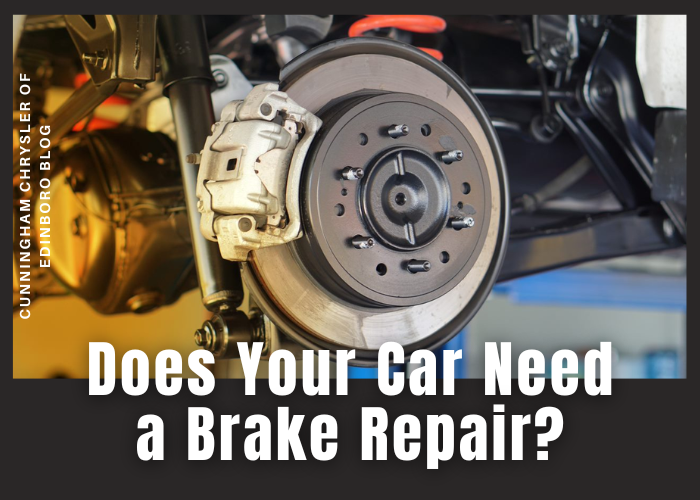
Does Your Car Need a Brake Repair?

brake repair near Edinboro, PA

Routine servicing visits at your local Chrysler dealer stave off the need for serious brake repair much in the same way that an apple a day keeps the doctor away. But even the best-kept brakes can run into occasional trouble. So keep an eye out for the following seven indicators that your brakes need to be inspected.

Spongy Brakes

If you ever press down on the brake pedal and feel less resistance than usual, then you might have air leaking into one of your brake hoses. The spongy sensation means hydraulic pressure is lost in a brake hose, negating its ability to transfer stopping power to the caliper.

It's unwise to drive with even slightly spongy brakes. Pull over and look under your car for signs of leaking brake fluid. You'll most likely need a technician to find and fix the leak.

Leaking Brake Fluid

Before you even start your car, you might notice yellow or yellowy-brown fluid puddling under your car or in one of the wheel wells. This means a hose is leaking brake fluid and needs to be repaired at once. Not only will fluid be coming out, but air will be getting in as well.

Your instrument panel will usually warn you of a brake fluid leak with a special light designed for that purpose. You can also check your brake fluid reservoir, which will be suspiciously low in the case of a leak.

Sluggish Brakes

The sensation of sluggish braking is different from spongy brakes. Here, your foot is meeting proper resistance on the pedal, but your car simply isn't stopping as promptly as it should. This means your brakes have somehow lost frictional force, most likely because of overheating.

Excessive use of brakes in heavy traffic can sometimes cause overheating, which begins to melt the resin in brake pads. A minute amount of gas escapes the melting resin, momentarily coating the pad and reducing its traction. If you pull over and allow your brakes to cool down, they should return to normal. But if your brakes are still sluggish when cool, have a technician take a look.

Squealing Brakes

Brake pads that wear down too thin emit a squealing sound. This unmissable noise is by design. It alerts you to the problem so you can have the worn-out pad replaced.

Grinding Brakes

When a brake pad loses its upper friction layer altogether, you'll hear it grinding directly on the metal of the rotor disc. At this point, your rotor disc is undergoing serious damage. On top of having your pad replaced, you might need to resurface the rotor.

Trembling Brake Pedal

When a rotor becomes damaged, you'll often feel it vibrating through the brake pedal when you slow down your car. This rhythmic trembling sensation is a brake pad scraping over the uneven rotor surface. You'll need to have the damaged rotor repaired or replaced.

Your Chrysler Dealer Finds a Fault

Rather than counting on your own senses to detect a brake problem, it's better to have a professional examine your vehicle every six months. Just as a doctor can cure a disease more easily when he catches it early, your technician can find and fix brake flaws before those faults cause you any trouble on the road.

Visit Cunningham Chrysler Dodge Jeep Ram of Edinboro today to have your brakes examined and repaired. We've been helping the region's drivers out with brake servicing and much more since 1993.
Posted in:

Related Posts

A photo of a red car driving on a snow covered road through a forest.

Three Winter Road Trip Tips: Getting Your Vehicle Ready for Winter Driving

Planning a winter road trip? A reliable and well-prepared vehicle is key for successful and safe winter road trips. With these winter road trip tips, you can head out on the road feeling confident that you'll get to your destination and home again safely. more 1. Invest in New Wipers Fully functional windshield wipers are important year-round, but they're even more important during winter weather. Snow, rain, sleet, and ice can easily accumulate on your windshield and reduce visibility. It's important to invest in high-quality, genuine OEM wipers and avoid aftermarket alternatives to get the most out of your wipers and prevent reduced visibility due to a poor-quality product. 2. Never Let Your Gas Tank Run on Empty It's also important to keep your tank at least half full on road trips, even if stopping that frequently feels inconvenient. When your tank gets too low in cold weather, there's an increased risk of vehicle damage. Cold weather increases condensation, and when condensation drips into your fuel tank, it can corrode and damage the metal. Keeping your gas tank at least halfway full can prevent issues and promote vehicle efficiency and longevity. 3. Schedule a Pre-Road Trip Service Appointment Winterizing your vehicle is necessary before the weather gets too cold, but it's even more important for a winter road trip. When you bring your vehicle to the service center, the technicians will winterize it and ensure it's ready for the season and your next road trip. They'll also check all vehicle components, including treadwear, wheel alignment, battery life, and brakes. The factory-trained technicians will also evaluate all necessary vehicle components and complete the required service and repairs. They'll top off your fluids and help identify and address any potential issues so you can avoid costly repairs in the long term. 4. Pack Emergency Gear Before you head out on the road, pack some emergency gear so you're prepared for whatever you may encounter. Some essentials include blankets in case you get stuck in the cold on the side of the road for any length of time, a bag of cat litter or sand in case you encounter icy terrain and need more traction, and an emergency car kit. If you're planning a winter road trip, we can schedule a winterization service appointment, so your vehicle is ready for whatever the weather and your winter road trip may bring. Contact us today at Cunningham Chrysler of Edinboro in Edinboro, PA, to schedule your service appointment. Image via

A graphic containing a photo of a car ac vent and the text: 5 Summer Maintenance Tips from your Local Jeep Dealer

5 Summer Maintenance Tips from your Local Jeep Dealer

As a respected local Jeep dealer, here's our guide to summer maintenance for easy-breezy miles and summertime smiles. more 1. Get Your Coolant Topped Up (and Possibly Flushed) Coolant is the fluid that prevents your engine from overheating. Combine the heat of being under the hood on a hot sunny day and the heat of the thousands of explosions per minute inside an internal combustion engine, and you can see how without coolant, an engine might overheat very quickly. Check with your Jeep maintenance team to see if your coolant needs topping up or a flush. 2. Check Your Battery Winter is often thought of as the time of year when batteries die, but did you know that AAA reports over two million battery service calls per year in the summer? Hot weather can make the fluids in your battery more prone to evaporation, leading to dead batteries and ruined road trips. 3. Check Your Tire Pressure Did you know that tire pressure is seasonal? Whether you're riding summer tires or 35-inch off-roading monsters, the air in your Jeep's tires expands and contracts with the season (and on every drive). Check your tire pressure regularly when the thermometer swings, and of course, make sure you're riding on summer tires. 4. Change Your Oil Motor oil helps cool and lubricate your engine, also helping to minimize overheating. If you're creeping up on the month or the mileage limit from your last oil change, be sure to get your oil changed to keep your engine working smoothly. Expecting extreme heat this summer? Consider choosing synthetic motor oil, which is often better at handling extreme temperatures than its conventional counterpart. 5. Air Conditioner Service Adults, kids, and pets are all prone to overheating in cars on hot days, and that's especially true if the air conditioning isn't working the way it should. If your A/C isn't blowing as ice-cold as you'd like, summer is the perfect time to bring your Jeep in for service so our team can ensure you stay cool all summer long.   Whether it's summer tires, an oil change, a fresh battery, or making sure your A/C is in tip-top shape, there's nobody who knows your Jeep like the people who work on them day after day. Schedule your summertime maintenance appointment at Cunningham's of Edinboro in Edinboro, PA, and let our team help make your summer a legendary one. Image via

A graphic containing a photo of a radiator and the text: 4 Signs Your Chrysler Vehicle Needs a Radiator Repair - Cunningham Chrysler of Edinboro Blog

4 Signs Your Chrysler Vehicle Needs a Radiator Repair

It's your radiator's job to make sure your engine doesn't overheat, so it can be disastrous when there's something wrong with your cooling system. It's pretty easy to spot the signs that you need a radiator repair, though, so you'll be able to head to your Chrysler dealer before the problem gets too bad. more 1. Coolant Puddles Coolant pooling under or near your vehicle is easy to spot because it's a distinctive liquid. It's usually a bright shade like orange, yellow, or red. It also smells really sweet. If you're not 100% sure the bright, sweet-smelling liquid under your vehicle is coolant, then take a peek at the liquid still in your radiator to see if the color and smell match the puddle. Be careful not to directly inhale any of the liquid. 2. Rust or Corrosion On Your Radiator If there are rusty spots on or near your radiator, then you might have a coolant leak. When you have a coolant leak, the liquid can get onto metal components in your radiator, quickly evaporate, and leave rust or discoloration behind. The metal components of your radiator can also rust because of moisture in the system, exposure to debris from the road, or contaminants in the coolant itself. This can lead to coolant leaking out of the cooling system, so it's a good idea to get components replaced as soon as you notice they're starting to corrode. 3. Low or Dropping Coolant Levels If there's a lot less coolant in the system than there should be, then you may have a leak, even if you haven't spotted rusty components or a puddle of coolant. This is especially true if your coolant level seems to be dropping faster than usual. You should check the level every few weeks just to stay on top of things. That'll also make sure you notice when your coolant level seems to have dropped a lot more than it usually does between checks. 4. Overheating Engine A faulty radiator can make your temperature gauge climb into the red zone, indicating your engine is overheating. Smoke or steam might start pouring out from under the hood, too. If your engine is overheating, then pull over ASAP and don't attempt to drive again for at least half an hour. If the temperature gauge starts climbing soon after you start driving again, then call a tow truck. Parts of your engine can actually melt if it can't cool down.   Do you need someone to take a peek at your radiator and fix any problems you're having? Stop by Cunningham Chrysler of Edinboro, or call us at 814-250-4351 to talk to someone from our service department about bringing your Chrysler in for repairs. Image via